
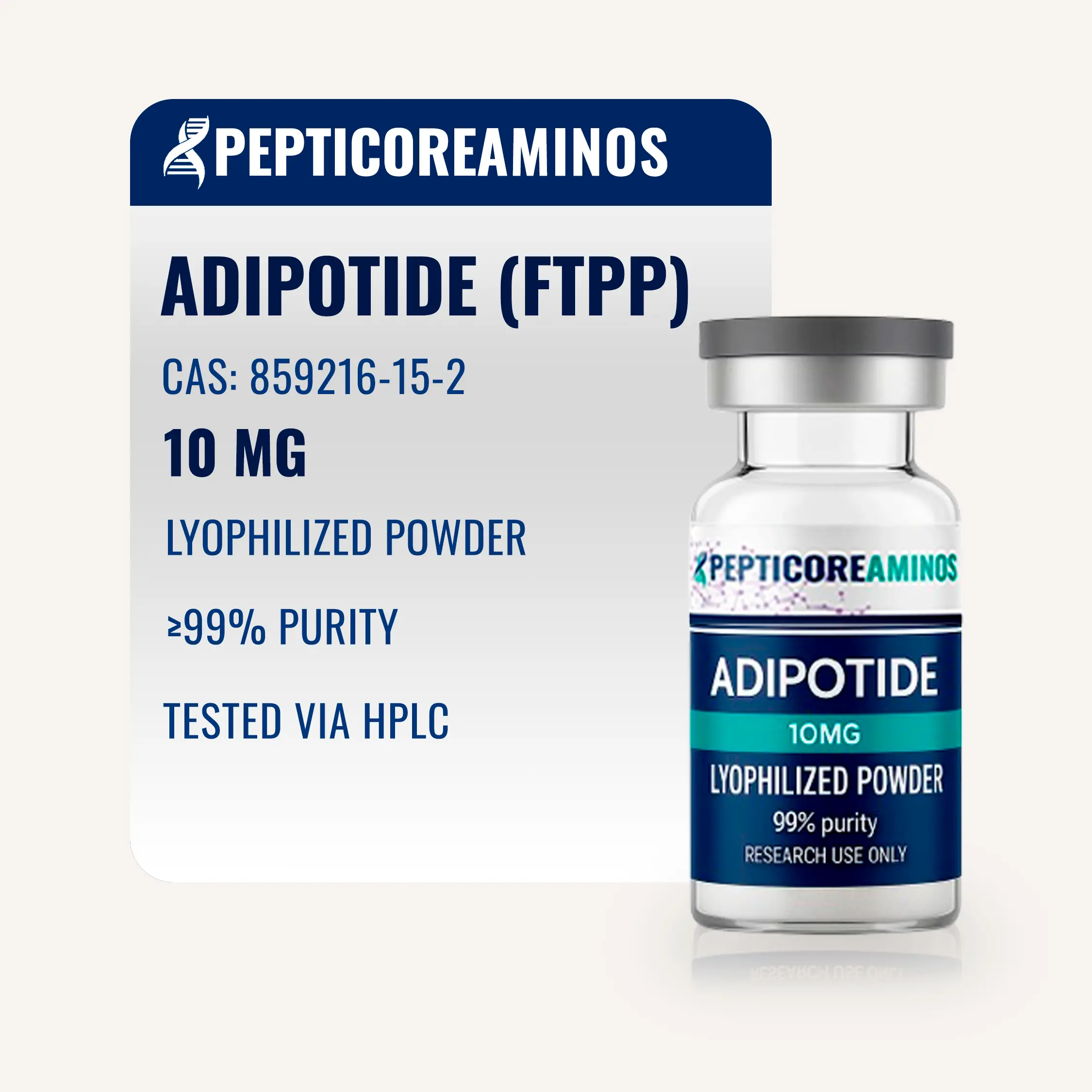
Adipotide (FTPP) – Experimental Peptide and Targeted Lipolysis
Adipotide (FTPP) 10mg , also known as FTPP , is an experimental peptide designed to induce a selective reduction in adipose tissue through a completely different mechanism than traditional weight loss approaches. Instead of directly affecting metabolism or appetite, Adipotide specifically targets the vasculature of white adipose tissue , inducing apoptosis of the blood vessels that feed adipocytes. Without nutrient supply, fat cells undergo programmed cell death, resulting in a rapid and significant reduction in fat mass.
Adipotide (FTPP) 10mg, The peptide entered Phase I clinical trials in 2011 following particularly promising results in preclinical studies on primates, particularly rhesus macaques. These studies showed that Adipotide was able to produce rapid weight loss , a reduction in BMI , improved insulin sensitivity , and even changes in feeding behavior in treated animals. Its uniqueness lies in its ability to selectively alter the blood vessels of adipose tissue while preserving those in other body regions.
Mechanism of action and reduction of adipose tissue
Adipotide (FTPP) 10mg primary function is its ability to induce targeted apoptosis of endothelial cells that form blood vessels within white adipose tissue. This process does not directly affect the adipocyte, but rather interrupts its blood supply, inducing indirect cell death. This action makes Adipotide a unique research peptide: rather than interacting with adipocyte receptors or complex metabolic pathways, it acts as a selective anti-angiogenic agent .
Studies conducted on rhesus macaques have shown significant weight loss even in overweight and obese animals. In addition to the reduction in fat mass, a decrease in insulin resistance was observed, one of the most important signals linked to the prevention of type 2 diabetes. The overall effect translates into a marked reduction in BMI, an improved glycemic profile, and a reduction in hormonal changes associated with obesity.
One of the most interesting aspects that emerged during the studies was that the animals treated with Adipotide showed a spontaneous reduction in caloric intake . The macaques changed their eating behavior, significantly reducing the amount of food they ingested during the day. This phenomenon did not appear to be a primary effect of Adipotide, but rather a consequence of the rapid remodeling of adipose tissue and associated metabolic changes.
The role of the protein Prohibitin
The precision with which Adipotide works may be explained by its interaction with a membrane protein called prohibitin . This protein appears to be selectively expressed on the blood vessels that feed white adipose tissue and, surprisingly, also on some tumor cells.
Studies show that Adipotide binds to prohibitin, allowing the peptide to target only the adipose tissue vasculature without damaging healthy blood vessels elsewhere. If confirmed, this would make prohibitin a potential, highly specific target for new anti-obesity strategies and even for oncology applications , given that many tumors depend on intense angiogenesis to grow and metastasize.
Adipotide and oncology
The presence of prohibitin on certain types of tumor cells has attracted particular attention in the oncology field. Since tumors require a constant blood supply to grow, interfering with their vascularization can lead to functional tumor collapse . Researchers have hypothesized that Adipotide may exhibit anti-angiogenic effects even under these conditions, opening the door to potential uses in oncology research.
Adipotide could enable more targeted therapies, capable of targeting tumors without damaging healthy tissue, thanks to the potential specificity of its binding to prohibitin. Although studies are still in the early stages, this is considered one of the most innovative and promising aspects of the peptide.
Effects on glucose and metabolism
In the metabolic field, Adipotide has shown surprising effects on improving glucose tolerance . Experimental studies have shown that the peptide’s effectiveness in reducing blood sugar levels occurs independently of weight loss . This suggests that it is the selective loss of adipose tissue that improves insulin sensitivity, and not weight loss itself.
The ability to improve glycemic control without requiring significant weight loss opens up important prospects in the study of diabetes prevention and management . The effects of Adipotide allow us to better understand the biological mechanisms through which excessive adipose tissue mass contributes to the development of insulin resistance.
Some hypotheses suggest that Adipotide may reduce adipose tissue primarily through a spontaneous reduction in appetite. However, a significant body of evidence indicates that the peptide produces structural changes in adipose tissue and improves glucose tolerance independently of weight loss . This supports the idea that the observed mechanism is direct, mediated by apoptosis of adipose blood vessels.
Future research
Research on Adipotide focuses primarily on obesity, metabolism, insulin resistance, and diabetes . The peptide represents an innovative and radically different approach from current pharmacological and nutritional methods, as it directly affects the vascularization of adipose tissue, selectively eliminating fat cells.
The fact that Adipotide is an anti-angiogenic agent makes it particularly interesting in the oncology field, as many tumors depend on strong angiogenesis. The possibility of exploiting its selectivity towards prohibitin could lead to new precision therapeutic strategies.
Adipotide exhibits low toxicity in laboratory animals, good subcutaneous bioavailability, and poor oral bioavailability, following a profile common to other peptides. As with all compounds intended for preclinical study, the dose-response relationship observed in animals is not transferable to humans and requires further investigation.

Reviews
There are no reviews yet.