
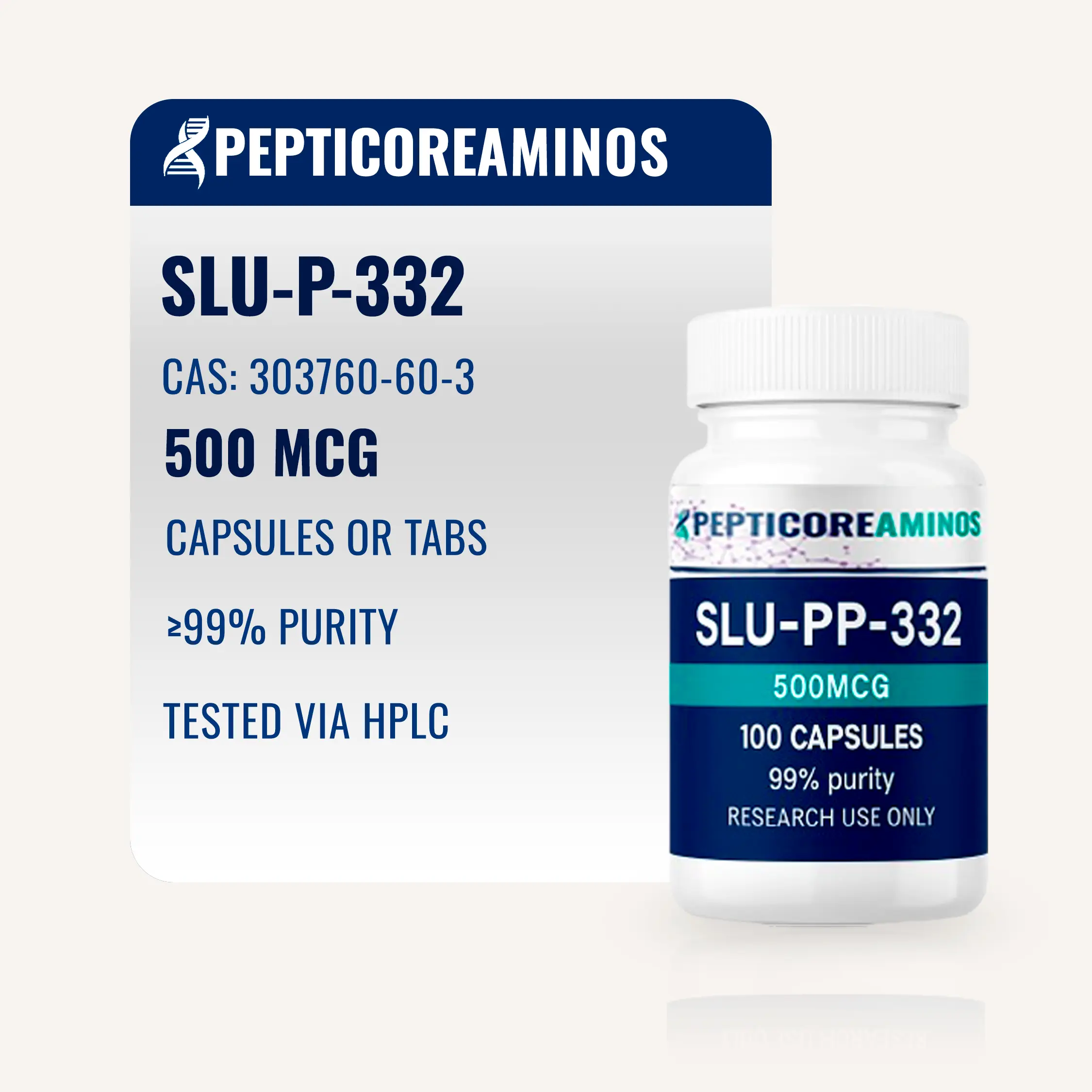
SLU-PP-332 – Experimental exercise mimetic compound
SLU-PP-332 500mcg, SLU-PP-332 is an investigational compound designed to mimic the metabolic effects of exercise through activation of estrogen-related receptors (ERR) , specifically ERRα , ERRβ , and ERRγ . This stimulation promotes increased energy expenditure, increased fatty acid oxidation, and improved mitochondrial function. It is one of the most promising candidates in modern research to replicate the effects of exercise at the molecular level, with potential applications in metabolism, cardiovascular health, and longevity.
Research Overview and Context
SLU-PP-332 500mcg, Regular exercise is known to improve cardiovascular health, metabolism, mood, and cognitive function, reducing the risk of chronic diseases. However, pharmacologically replicating the benefits of physical activity has always been a difficult goal. Until recently, most attempts—including weight-loss drugs—had yielded limited results. With the arrival of molecules like semaglutide and liraglutide , a new avenue in metabolic modulation has opened up, but SLU-PP-332 represents a further step forward: an ERR receptor agonist capable of activating exercise-associated metabolic pathways, increasing muscle endurance and improving cardiac and brain function.
SLU-PP-332 500mcg, In preclinical models, SLU-PP-332 binds primarily to ERRα and ERRγ variants , stimulating gene expression that regulates energy homeostasis and mitochondrial biogenesis. This action leads to increased fat oxidation, improved muscle function, and increased exercise tolerance. Animal studies have shown a significant reduction in fat mass and increased physical endurance, suggesting a potential positive impact on obesity, metabolic syndrome, and aging.
Biological role of ERR receptors
Estrogen-Related Receptors (ERRs) are nuclear transcription factors that regulate genes involved in energy metabolism and mitochondrial production. Although they share a genetic resemblance to estrogen receptors, they are not regulated by sex hormones: their name derives solely from their structural similarity. There are three main isoforms: ERRα , ERRβ , and ERRγ . Activation of these receptors increases mitochondrial efficiency, stimulates fatty acid β-oxidation, and improves the ability of skeletal muscle to utilize oxygen during prolonged activity.
Experiments conducted on mice genetically lacking the ERRα and ERRγ genes have demonstrated marked exercise intolerance, paler muscles, and reduced oxidative capacity. This indicates that these receptors are essential for exercise tolerance and lipid metabolism. ERRα, in particular, regulates genes for gluconeogenesis , fatty acid metabolism, and thermogenesis in brown adipose tissue, contributing to the regulation of glucose, cholesterol, and insulin levels.
Effects on the heart, muscles and brain
In animal models of heart failure, SLU-PP-332 has been shown to improve ejection fraction , reduce myocardial fibrosis, and increase survival. Its activity on ERRα and ERRγ receptors promotes cardiac energy homeostasis and regulates fatty acid oxidation. Furthermore, by stimulating autophagy via the transcription factor TFEB , it contributes to the removal of damaged cells, preventing the accumulation of scar tissue.
In the brain, ERRγ is implicated in neuronal protection. Agonists of this receptor, such as SLU-PP-332, are being studied as potential treatments for Parkinson’s disease . ERRγ regulates genes responsible for mitochondrial respiration, autophagy, and synaptic transmission, helping to reduce toxicity mediated by the protein α-synuclein. Improving mitochondrial function in neurons may slow the progression of neurodegenerative diseases.
Conclusions
SLU-PP-332 represents one of the most promising discoveries in exercise biology and metabolic research. By acting as an ERR receptor agonist , it improves mitochondrial function, increases muscle oxidative capacity, promotes fat loss, and promotes cardiovascular and neurological benefits. Although still in the early stages of testing, preliminary results indicate that this compound could pave the way for a new class of “exercise mimetics” capable of reproducing many of the beneficial effects of physical activity at the cellular level.
Reviews
There are no reviews yet.