
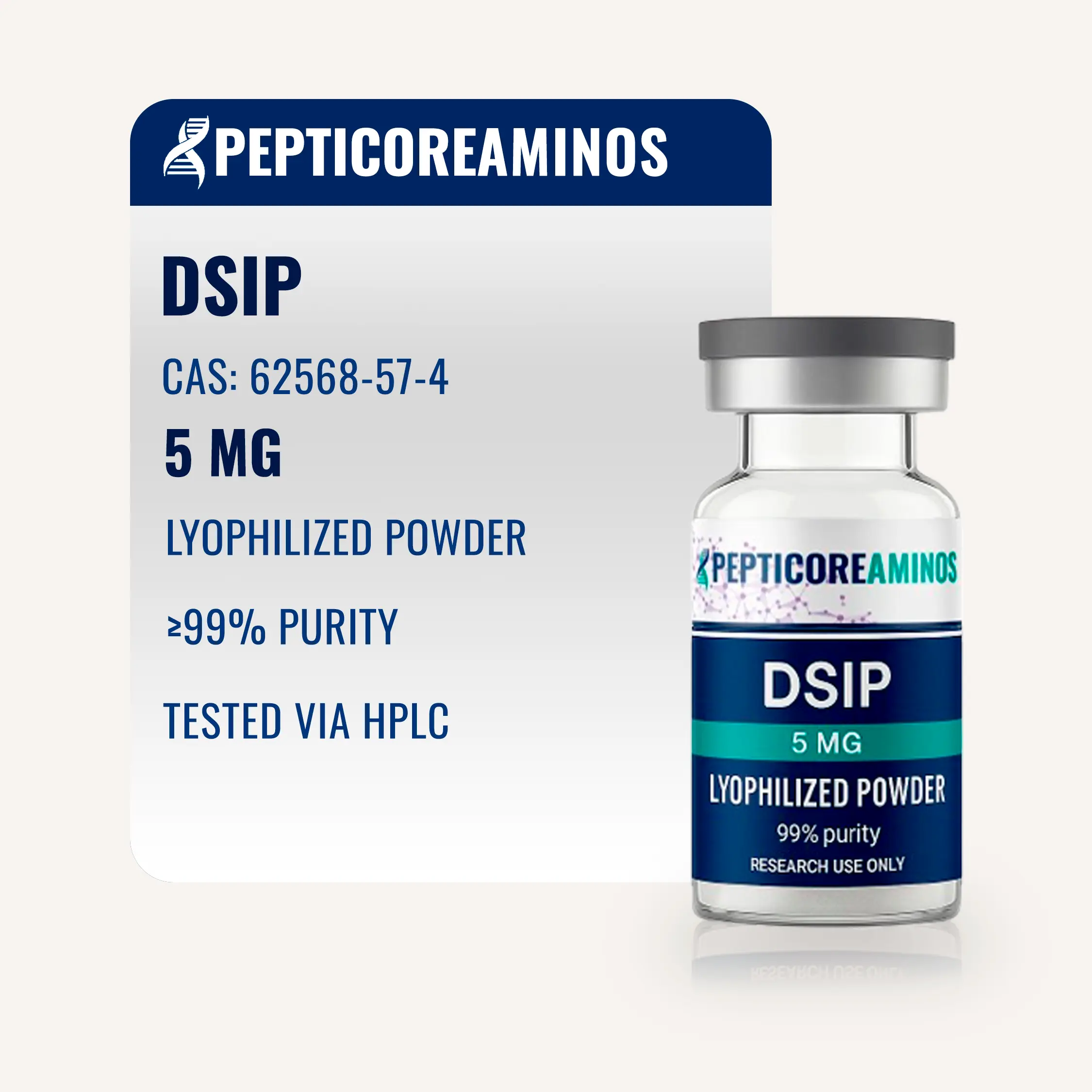
DSIP (Delta Sleep-Inducing Peptide)
Neuropeptide for research on sleep regulation, pain modulation, mitochondrial protection and neuroendocrine balance.
What is DSIP?
DSIP 5mg (Delta Sleep-Inducing Peptide) is a small, naturally occurring neuropeptide first identified in cerebral venous blood during slow-wave sleep. It has been studied in preclinical models and small, exploratory human studies for its potential involvement in the regulation of sleep-wake cycles , pain modulation , cellular metabolism , and the response to oxidative stress . The literature indicates multisystem actions involving the central nervous system and peripheral tissues, suggesting regulatory functions broader than just sleep.
Mechanisms of action: neuroendocrine homeostasis and bioenergetics
The action profile of DSIP appears to emerge from its interaction with neuroendocrine circuits (hypothalamic–pituitary–adrenal axis), monoaminergic systems (e.g., modulation of MAO-A and serotonin), and its influence on mitochondrial function . Under conditions of stress and hypoxia, the peptide has been associated with the maintenance of oxidative phosphorylation and reduced generation of reactive oxygen species, with implications for organ protection and metabolic resilience.
DSIP and sleep: normalizing cycles
Despite its name, the relationship between DSIP and sleep is complex. Studies report mixed results: in some cases, an increase in slow-wave sleep and a reduction in paradoxical sleep are observed , while in others, the EEG shows no significant changes. A biphasic dynamic (initial activation followed by sedation) has been described, and in subjects with chronic insomnia , improvements in sleep structure, shorter sleep onset latency, and greater overall efficiency. Overall, the peptide is described as a regulator of sleep-wake rhythms rather than a direct sedative.
Pain modulation and withdrawal symptoms
DSIP 5mg In the preclinical setting, DSIP exerts a dose-dependent analgesic effect likely mediated by central opioid receptors , without evidence of addiction similar to conventional opioids. Small studies in human samples have reported reductions in pain perception and improved mood , with potential utility as an adjunct in chronic pain management protocols and in reducing pain rebound upon discontinuation of analgesics.
Metabolism, oxidative stress and mitochondrial function
In animal models, DSIP attenuates metabolic imbalances caused by stress that push mitochondria toward less efficient, more “oxidative” pathways. Maintaining mitochondrial respiration under hypoxia is accompanied by reduced free radical production. These properties have led to investigations into its potential role in conditions such as cerebral and cardiac ischemia, where bioenergetic protection could limit damage until blood flow is restored.
Mood, MAO-A, serotonin and HPA axis
DSIP 5mg The ability of DSIP to moderate changes in MAO-A and serotonin in stressful situations has led research into mood disorders . Cerebrospinal fluid analyses show lower DSIP levels in subjects with major depression compared to controls. An association with the regulation of the hypothalamic-pituitary-adrenal axis and with relevant clinical markers has also been highlighted .
Abstinence and weaning
Observational studies of patients undergoing alcohol or opioid withdrawal report high rates of symptom improvement or resolution with protocols that include DSIP; opioid withdrawal is more refractory and may require a greater number of administrations. These exploratory findings have prompted further investigation of autonomic regulation , stress, and craving control during the detox phase.
Oncology research: prevention and support
In murine models, monthly courses of DSIP resulted in a reduction in tumor incidence (>2.5-fold) and a lower frequency of chromosomal aberrations in the bone marrow. In experimental chemotherapy and cerebral ischemia protocols , DSIP (and related preparations such as Deltaran) showed improved cerebral perfusion and a favorable impact on motor control , behavior , and language in preclinical models, suggesting neuroprotection and faster functional recovery.
Systemic effects and muscle tissue
In addition to the CNS, DSIP has been linked to blood pressure modulation ,frequenza cardiaca, termogenesi e parametri immunitari. È stata inoltre osservata un’inibizione della somatostatina a livello muscolare, che potrebbe favorire ipertrofia e iperplasia in condizioni sperimentali. Il quadro complessivo dipinge il DSIP come regolatore fisiologico ampio con funzioni che precedono o preparano l’innesco del sonno.


Reviews
There are no reviews yet.