
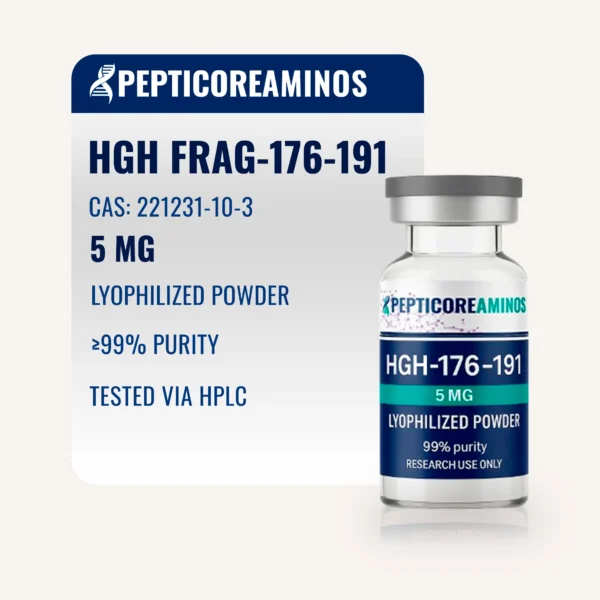
HGH Fragment 176–191
Synthetic peptide for research on lipid metabolism, lipolysis, energy regulation, and connective tissue regeneration.
What is HGH Fragment 176–191
HGH FRAG 176-191 5mg is a synthetic peptide derived from human growth hormone (HGH) , representing a modified version with targeted lipolytic effects. It is commonly known as the “lipolytic fragment” due to its ability to promote fat breakdown and regulate energy metabolism in animal research models. This peptide was developed to retain the metabolic benefits of HGH while eliminating the unwanted effects related to increased IGF-1 levels, bone or muscle growth, and altered insulin sensitivity.
Mechanism of action and biochemical role
HGH FRAG 176-191 5mg acts as the C-terminal portion of HGH, responsible for the natural hormone’s lipolytic and hypoglycemic effects . Laboratory studies have shown that this fragment retains the ability to stimulate fat burning and inhibit the formation of new adipose deposits , without negatively affecting glucose levels or hormonal regulation. In animal models predisposed to obesity, the peptide produced a significant reduction in fat mass and an increase in metabolic activity, reducing the rate of lipid accumulation and improving cellular energy efficiency.
HGH FRAG 176-191 5mg, Experiments conducted on genetically modified mice confirmed that the fragment’s action is mediated by beta-3 adrenergic receptors (ADRB3) , which directly regulate lipolysis in adipose tissue and thermogenesis in skeletal muscle. However, the peptide’s lipolytic effect was observed even in the absence of ADRB3, suggesting the existence of secondary metabolic pathways involved in the control of energy balance and caloric expenditure.
Effects on lipolysis and body weight
In tests on obese mouse models, Fragment 176–191 was shown to reduce body weight by up to 50% over three weeks of treatment, compared to controls treated with saline. This effect was observed exclusively in obese animals, while no significant weight changes were observed in lean mice, indicating a selective action on excess fat cells.
This selective behavior opens up new perspectives for studying energy homeostasis , demonstrating that the fragment acts only when the body experiences abnormal lipid accumulation, without interfering with the physiological mechanisms of metabolism under normal conditions. The results also suggest that the peptide’s activity may be related to the activation of mitochondrial lipid metabolism and the regulation of beta-oxidation .
Hypoglycemic effects and glucose regulation
In vitro and in vivo studies have shown that the C-terminal portion of HGH, from which Fragment 176–191 is derived, is responsible for most of the hormone’s hypoglycemic effects . Of the various fragments studied, 176–191 has proven to be the most effective in reducing blood glucose levels , thanks to a secondary and prolonged increase in plasma insulin levels .
These results have led to the hypothesis of a potential experimental use of the fragment in the study of glycemic regulation , prediabetes and type 2 diabetes , although it remains confined to an exclusively laboratory and scientific research setting.
Regeneration of cartilage and connective tissue
While the primary interest in Fragment 176–191 has been in lipid metabolism, more recent studies have explored its potential in cartilage regeneration . Research published in 2015 in South Korea found that the fragment can amplify the effects of hyaluronic acid (HA) injections in promoting joint tissue growth and recovery.
In animal models, weekly injections of Fragment 176–191 increased markers of cartilage regeneration, while the combination with HA further enhanced the results, showing improved mobility and a reduction in signs of osteoarthritis . These data have opened new lines of research on the role of HGH fragments in joint healing processes and tissue reconstruction .
Safety and tolerability profile
One of the main strengths of Fragment 176–191 is its safety . Double-blind, controlled clinical studies have demonstrated that administration, both oral and intravenous, does not alter basic physiological or metabolic parameters. No changes in glucose levels, glucose tolerance, insulin sensitivity, or IGF-1 values were detected . Furthermore, no significant side effects such as headache or edema have been reported.
These observations suggest that the fragment offers many of the metabolic benefits of HGH without the side effects associated with its long-term use, such as insulin resistance, acromegaly, or hypertension . In animal models, the peptide has not shown anabolic or proliferative activity, ensuring a stable and safe experimental profile.
Future directions of research
Scientific interest in HGH Fragment 176–191 remains focused on three main areas: lipolysis , energy regulation , and connective tissue regeneration . Ongoing studies aim to understand how the fragment can influence mechanisms of energy homeostasis , fat metabolism , and cellular recovery . Its biological selectivity makes it a reference model for exploring controlled fat loss processes without altering systemic hormone levels.
This product is intended for scientific research only and is not approved for human or veterinary use. All information is for educational and laboratory purposes only.
Reviews
There are no reviews yet.