
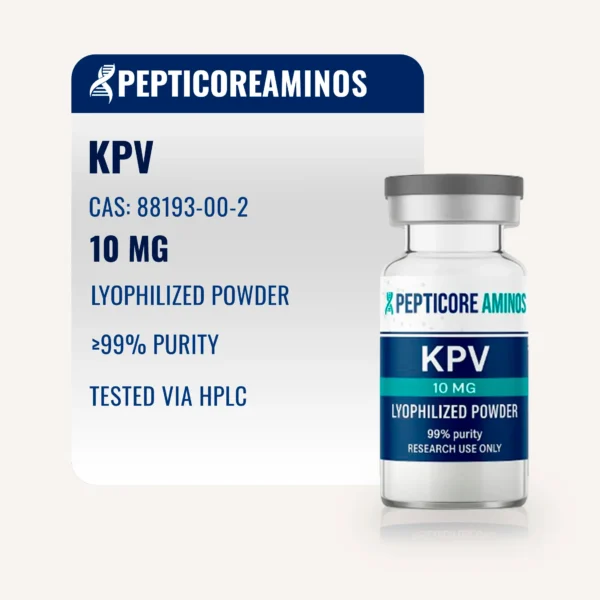
KPV 10mg KPV (Ac-KPV-NH₂) is a tripeptide peptide derived from α-MSH (melanocyte-stimulating hormone), recognized for its extraordinary anti-inflammatory, immunomodulatory, and regenerative properties . Preclinical studies have highlighted its potential in numerous research areas, particularly in tissue healing , inflammatory bowel diseases , and the reduction of post-surgical or post-trauma scarring .
Research and intestinal inflammation
KPV 10mg One of the most promising aspects of the Ac-KPV-NH₂ peptide concerns its ability to reduce intestinal inflammation . In murine models of inflammatory bowel disease (IBD), KPV administration has been shown to significantly reduce inflammatory infiltration, myeloperoxidase (MPO) activity, and histological signs of intestinal inflammation ( PubMed 28343991 ). Animals treated with KPV showed faster recovery and better weight gain compared to placebo controls.
KPV 10mg Further studies have explored the use of hyaluronic acid-functionalized nanoparticles to deliver the peptide specifically to inflamed areas of the intestine. This strategy improved mucosal healing and selectively reduced TNF-α levels , without interfering with other body systems ( PubMed 40073467 ). These results indicate that KPV represents an innovative and safer route for the treatment of intestinal inflammation, potentially useful as a preventive or maintenance agent in patients with IBD.
A particularly interesting aspect is the cellular transport mechanism: KPV enters colonic cells via the PepT1 channel , which is expressed in significant quantities only during inflammatory states. This explains why the peptide’s effect manifests almost exclusively in the presence of inflammation, making it an ideal candidate for chronic therapies with a low risk of side effects.
Systemic anti-inflammatory activity
The anti-inflammatory properties of KPV have been known for decades. Experimental studies have demonstrated that the peptide is a potent anti-inflammatory and immunomodulatory agent , capable of reducing key inflammatory mediators such as TNF-α , NF-κB , and MAP kinases , modulating the immune response in various areas: joints, skin, mucosal membranes, and the central nervous system. These effects have also been confirmed in advanced cellular models and suggest broad research potential in the autoimmune and systemic fields ( PubMed 18061177 ).
Role in wound healing
Wound healing is a complex biological process, divided into three main phases: inflammation , proliferation , and remodeling . Cells involved in these stages, such as fibroblasts, keratinocytes, and macrophages, express MC1R (melanocortin-1) receptors that bind both α-MSH and its analogues such as KPV . This means that the peptide can interact directly with skin cells to accelerate repair times and reduce the local inflammatory response . Unlike full-length α-MSH, KPV does not stimulate melanin production and therefore does not cause skin discoloration. This makes it an ideal candidate for research into regenerative therapies in dermatology, aesthetics, and surgery.
Furthermore, studies have shown that the peptide inhibits the growth of Staphylococcus aureus and Candida albicans at physiological concentrations, offering a unique combination of anti-inflammatory and antimicrobial activity . This dual action makes KPV particularly interesting for research on wound healing and skin regeneration.
Scar prevention and tissue remodeling
The most recent research indicates that KPV can reduce the incidence of hypertrophic and keloid scars , thanks to its ability to modulate IL-8 secretion and type I collagen metabolism . During the remodeling phase, in fact, the peptide helps normalize fibroblast activity and limit excessive deposition of extracellular matrix. These effects are not limited to the skin: similar results have been observed in tissues such as the lungs and heart, where KPV has shown a reduction in fibrotic responses and oxidative damage. This paves the way for new research into its use in controlling tissue fibrosis and protecting organs from chronic inflammation or mechanical stress.
Conclusion
Overall, KPV (Ac-KPV-NH₂) emerges as a highly valuable peptide for biomedical research, capable of selectively targeting inflammatory processes, promoting tissue regeneration, and offering a superior safety profile compared to other molecules in the same class. The combination of targeted anti-inflammatory action, antimicrobial activity, and collagen modulation makes KPV an attractive candidate for future studies in gastroenterology, dermatology, regenerative medicine, and wound healing .
Reviews
There are no reviews yet.