
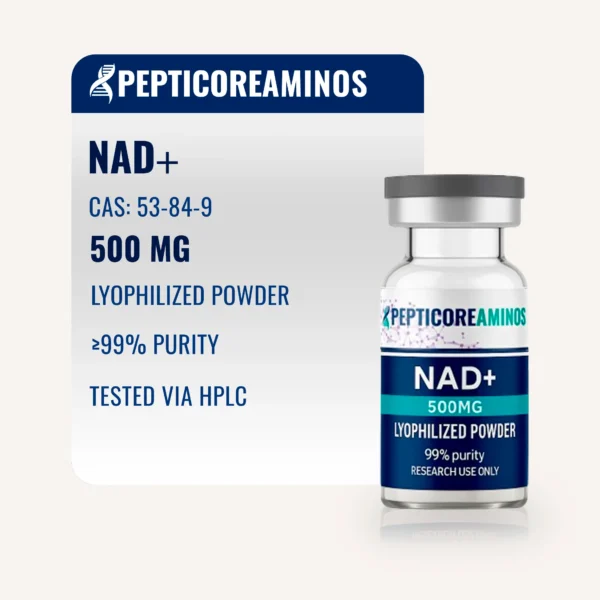
NAD⁺ — Essential coenzyme for metabolism, longevity, and cellular function
NAD⁺ as an extracellular signal
NAD⁺ 500mg In addition to its intracellular functions, NAD⁺ can be released into extracellular compartments in specific physiological contexts. Experimental evidence suggests that neurons in various regions (for example, in blood vessels, the bladder, the colon, and certain brain areas) release NAD⁺ as a signaling molecule . This additional dimension broadens our understanding of the coenzyme: it is not only an “energy transporter” but also a modulator of cell-to-cell communication, with potential implications for the regulation of smooth muscle tone and other peripheral functions.
Cellular aging, homeostasis and resilience
NAD⁺ availability tends to decrease with age and in many pathological conditions. This reduction has been associated with declines in DNA repair capacity, mitochondrial dysfunction, more marked inflammatory responses, and worsening metabolic homeostasis. Several preclinical studies link NAD⁺ modulation to benefits in key areas: energy conversion , DNA repair , immune defense , and circadian rhythms . In animal models, increases in the cofactor’s availability have been associated with improved mitochondrial quality, more balanced antioxidant signaling, and greater functional stability of energy-demanding tissues such as muscle and the nervous system.
Mitochondrial quality and regulatory network
Scientific literature describes the mitochondrion not only as a “powerhouse,” but as a signaling platform that integrates innate immunity, metabolism, and stem cell status. In this context, NAD⁺ acts as a control hub: adequate levels favor sirtuin-mediated deacetylation, mitochondrial biogenesis, and the maintenance of redox balance; conversely, a decrease in the cofactor has been associated with suboptimal nucleo-mitochondrial communication, altered redox status, and increased oxidative stress. In mouse models, restoring NAD⁺ pools has been linked to improved mitochondrial function and more youthful transcriptional signals.
Nervous system, muscle and vascular system (preclinical evidence)
In animal studies, NAD⁺ modulation has been associated with neuronal protection from oxidative stress, improved synaptic efficiency, and mitochondrial resilience. Adequate levels of the cofactor have also been linked to the regulation of PGC-1α, a coactivator that promotes mitochondrial biogenesis and antioxidant defenses. In muscle, maintenance of oxidative capacity and metabolism has been observed, with effects on strength and endurance in aged models. In the vascular system, some preclinical studies have reported signals consistent with improved endothelial function and a reduction in age-related alterations in specific arteries; conversely, the role of NAD⁺ in extracellular signaling in smooth muscle may influence dynamics such as vascular tone.
Usage note and research context
The information provided here is for informational and educational purposes only and refers to primarily preclinical experimental evidence. This content does not constitute medical advice or indications for clinical use. Any uses of NAD⁺, its precursors, or combinations with other compounds remain the subject of research and scientific evaluation. Interpretation of the evidence must consider differences between species, doses, routes of administration, and experimental settings.
Reviews
There are no reviews yet.