
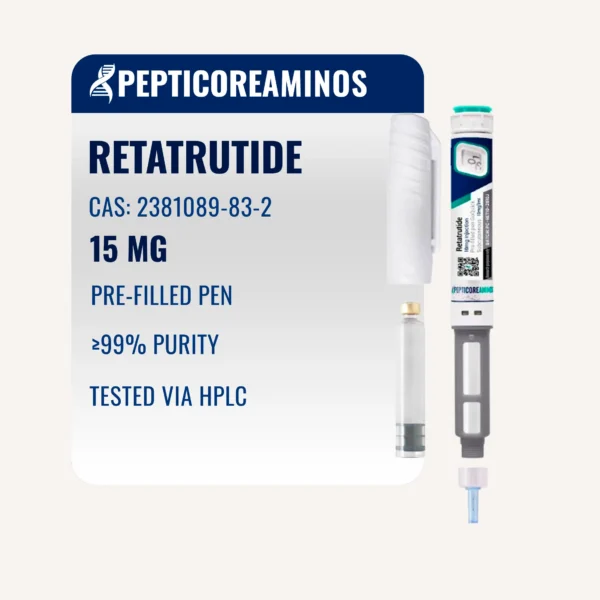
Retatrutide — GLP-1 / GIP / Glucagon Tri-Agonist
What is Retatrutide?
Retatrutide – Pre-filled pen 15mg/1.5ml (LY3437943) is an experimental next-generation peptide belonging to the class of so-called incretin mimetics . It acts simultaneously on three key hormone receptors— GLP-1 , GIP , and glucagon —with the aim of synergistically modulating appetite, glucose metabolism, and energy expenditure. This combination of actions makes it, in research settings, a potential successor to tirzepatide , expanding the concept of “dual agonist” towards a new generation of tri-agonists . All Pepticore Aminos products are intended for research and laboratory use only .
How it works (GLP-1, GIP, Glucagon)
GLP-1 (glucagon-like peptide-1) sends satiety signals to the brain, slows gastric emptying, and stimulates glucose-dependent insulin secretion. It also helps reduce endogenous glucagon secretion, improving postprandial glycemic balance.
GIP (glucose-dependent insulinotropic peptide) amplifies the insulin response after carbohydrate and lipid ingestion, promoting the use of glucose as an energy source and reducing hepatic glucose production. It acts synergistically with GLP-1, enhancing insulin sensitivity and lipid metabolism.
Glucagon , in this context, does not act as an insulin antagonist but as a modulator of energy metabolism. Its controlled stimulation increases lipolysis and fatty acid oxidation, promoting greater resting calorie expenditure and a reduction in visceral fat. This triad of mechanisms makes retatrutide a unique experimental platform for studying complex metabolic balance.
 Research Highlights
- −24.2% body weight loss after 48 weeks in adults with obesity (phase 2, NEJM 2023)
- −2.16 HbA1c points and ~17% weight loss in T2D at 36 weeks (phase 2, Lancet 2023)
- −81–82% liver fat with normalization <5% in the MASLD substudy (Nature Medicine 2024)
Clinical evidence (phase 2)
Retatrutide – Pre-filled pen 15mg/1.5ml In the study published in the New England Journal of Medicine , retatrutide produced mean weight reductions of −22.8% (8 mg) and −24.2% (12 mg) at 48 weeks, with simultaneous improvements in BMI, waist circumference, and blood pressure. See
NEJM 2023 /
PubMed .
Type 2 diabetes: In the Lancet trial , treatment with retatrutide reduced HbA1c by up to −2.16 points at the highest doses, accompanied by weight loss of up to ~17% over 36 weeks. The most common adverse events were gastrointestinal (nausea, reduced appetite) and mild to moderate in severity. See
Lancet 2023 /
PubMed .
Liver (MASLD): The substudy published in Nature Medicine showed a relative reduction in liver fat of up to −81–82% at doses of 8–12 mg, with normalization (<5%) in the majority of participants and improvement in markers of inflammation and liver function. See
Nature Medicine 2024 /
PubMed .
Comparison with Semaglutide and Tirzepatide
Semaglutide (GLP-1 agonist) showed weight reductions of up to ~15% in ~68 weeks; tirzepatide (GLP-1 agonist + GIP) up to ~22.5% in ~72 weeks. Retatrutide , adding glucagon receptor activation, achieved ~ 24% in 48 weeks. While not direct comparisons, the data suggest a consistent progression of efficacy across the three generations of incretin agonists, positioning retatrutide as a potential pharmacological evolution of tirzepatide.
| Drug | Activated receptors | Main effects | Weight reduction (duration) |
|---|---|---|---|
| Semaglutide | GLP-1 | Satiety↑, gastric emptying↓, glycemic control | ~15% (≈68 weeks)* |
| Tirzepatide | GLP-1 + GIP | Appetite↓, blood sugar↓, insulin response↑ | ~22.5% (≈72 weeks)* |
| Retatrutide | GLP-1 + GIP + glucagon | All of the above + energy expenditure ↑; marked reduction in liver fat | ~24% (48 weeks) |
Retatrutide – Pre-filled pen 15mg/1.5ml, *Indicative values from different studies (not head-to-head). Retatrutide data from NEJM 2023; tirzepatide and semaglutide from the SURMOUNT and STEP trials.
Reviews
There are no reviews yet.