
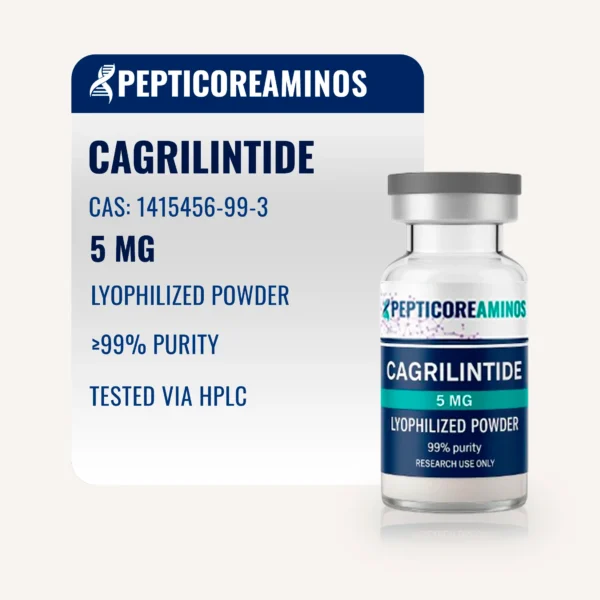
Cagrilintide – An Amylin Analogue for Obesity, Metabolism, and Glycemic Control Research
Cagrilintide 5mg is a long-acting synthetic analogue of amylin , a natural peptide secreted by pancreatic beta cells along with insulin. It is being researched for its potential in the experimental treatment of obesity , type 2 diabetes , and other metabolic disorders. Due to its resistance to enzymatic degradation, it has a prolonged half-life, allowing for more stable and long-lasting effects than natural amylin.
In animal models, Cagrilintide has shown significant reduction in appetite, improved glycemic control, and sustained weight loss. It has been studied not only for its effect on glucose metabolism, but also for its potential impact on liver damage , cardiovascular disease , and neuronal health. In some studies, a synergistic effect has been observed when combined with semaglutide , with superior results in terms of weight reduction and improved body composition.
Origin and function of Amylin
Cagrilintide 5mg Amylin (also known as IAPP , Islet Amyloid Polypeptide) is a peptide co-secreted with insulin by pancreatic beta cells. It acts as a regulator of energy metabolism, inducing satiety , slowing gastric emptying , and helping to stabilize postprandial blood sugar levels . This modulatory function helps avoid sudden changes in blood glucose, promoting more efficient use of sugars as an energy source and reducing their conversion to fat.
Cagrilintide 5mg Amylin also plays a role in regulating bone metabolism , sharing structural characteristics with calcitonin and calcitonin gene-related peptide (CGRP). These peptides help reduce blood calcium levels by promoting its deposition in the bones. However, endogenous amylin is rapidly degraded by the same enzymes that inactivate insulin, limiting its therapeutic efficacy. Cagrilintide was designed to overcome this limitation, offering superior plasma stability and prolonged action.
Mechanism of action of Cagrilintide
Cagrilintide 5mg acts through several physiological mechanisms involving the gastrointestinal tract, central nervous system, and pancreas. At the gastric level, it slows the transit of food , prolonging digestion and promoting a sense of fullness. This process reduces overall caloric intake and limits postprandial glycemic peaks. Furthermore, its action on the central nervous system—particularly the arcuate nucleus of the hypothalamus —stimulates satiety signals and modulates eating behavior.
Cagrilintide 5mg In the pancreas, Cagrilintide helps reduce the secretion of glucagon , a hormone that stimulates glucose production by the liver. This synergistic mechanism, similar to that observed with GLP-1 agonists, improves the balance between insulin and glucagon, reducing the body’s tendency to convert glucose into fat. The result is an improvement in the glycemic profile and a progressive reduction in fat mass .
Peptide structure and design
Cagrilintide represents a remarkable example of peptide engineering. Its sequence has been modified to resist enzymatic degradation and prevent the protein aggregation typical of natural amylin. The addition of proline residues at the terminal end reduces the formation of amyloid fibrils, while the presence of a lipid chain at the N-terminus improves brain penetration and binding to amylin receptors (RAMP-1 and RAMP-3). These modifications give the peptide a prolonged half-life and a more favorable pharmacodynamic profile than its predecessors, such as pramlintide.
Research on obesity and metabolism
In experimental studies, once-weekly administration of Cagrilintide resulted in a 6% to 11% reduction in body weight within a few weeks compared to a placebo. When combined with semaglutide , the results were even more significant, with reductions of up to 17% in total body mass . This synergistic effect suggests a functional interaction between amylin and GLP-1 receptors, leading to more effective appetite suppression and improved insulin sensitivity.
In addition to its weight loss effects, research has shown improvements in metabolic parameters such as fasting blood glucose, insulin levels, and glycated hemoglobin (HbA1c). These results make Cagrilintide an interesting candidate for metabolic and nutraceutical research , particularly for studies on energy regulation and carbohydrate metabolism.
Cagrilintide and cognitive health
Interest in cagrilintide is not limited to the metabolic field. Natural amylin has been associated with brain functions related to memory and cognitive regulation. Some studies have hypothesized a link between abnormal amylin levels and the formation of amyloid plaques in the brain, similar to those observed in Alzheimer’s disease. Although there is still no conclusive data on the direct role of cagrilintide in this context, its aggregation-resistant structure could theoretically contribute to neuronal protection and the reduction of oxidative stress in the brain.
The relationship between glycemic control and cognitive function is a subject of growing interest in the scientific community. Chronic hyperglycemia is known to increase inflammatory and oxidative processes that damage neuronal cells. By improving blood glucose management and insulin response, cagrilintide may indirectly promote greater brain health and improved long-term cognitive function.
Research synthesis and applications
Cagrilintide is produced by solid-phase peptide synthesis (SPPS) , ensuring high purity and stability. It is supplied as a lyophilized powder for experimental use only and can be reconstituted in aqueous solution or diluted acetic acid. Its stability of up to 24 months at −20°C makes it suitable for long-term laboratory studies. The use of Cagrilintide is limited to scientific and cosmetic research , in contexts investigating the mechanisms of metabolism regulation, hormonal signaling, and peptide interactions in weight and appetite control.
Note: The information provided here is for descriptive and research purposes only. Cagrilintide is not intended for human or veterinary use and should not be used for therapeutic purposes. All use must occur only in a controlled environment and in compliance with current testing regulations.
Reviews
There are no reviews yet.